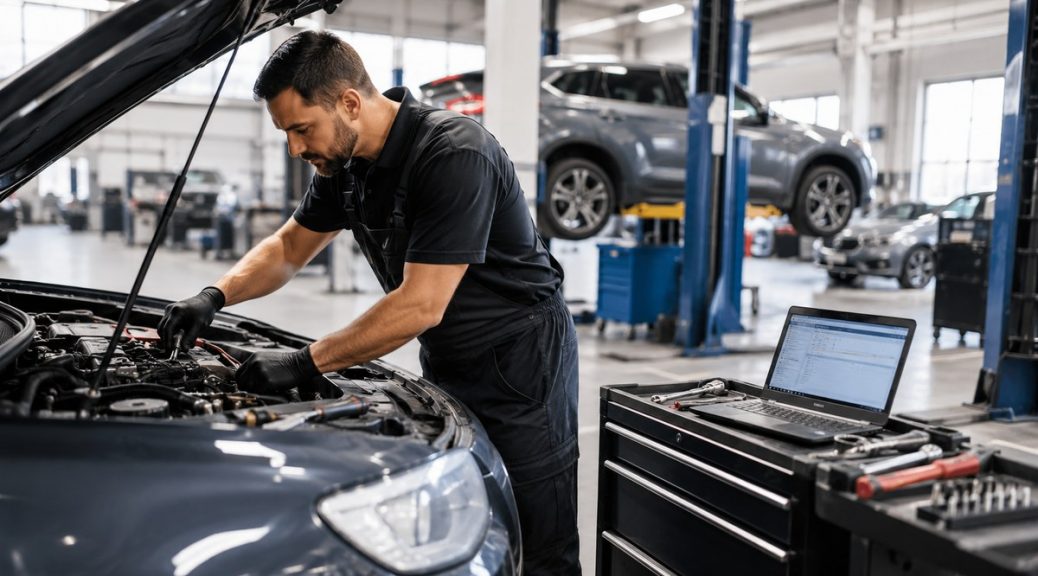
Automotive technician servicing a vehicle at an independent repair shop in Hillsboro Oregon

Independent Auto Repair in Hillsboro: What Matters Beyond the Labor Rate

Choosing an auto repair shop involves more than finding the lowest advertised price. Labor rate matters, but so do accurate diagnosis, technician experience, parts quality, communication, turnaround time, and the shop’s willingness to explain the recommended work.

At Beaverton Car Company in Hillsboro, our service department works on all vehicle brands and offers customers different repair options based on the needs of the vehicle and the customer’s budget.
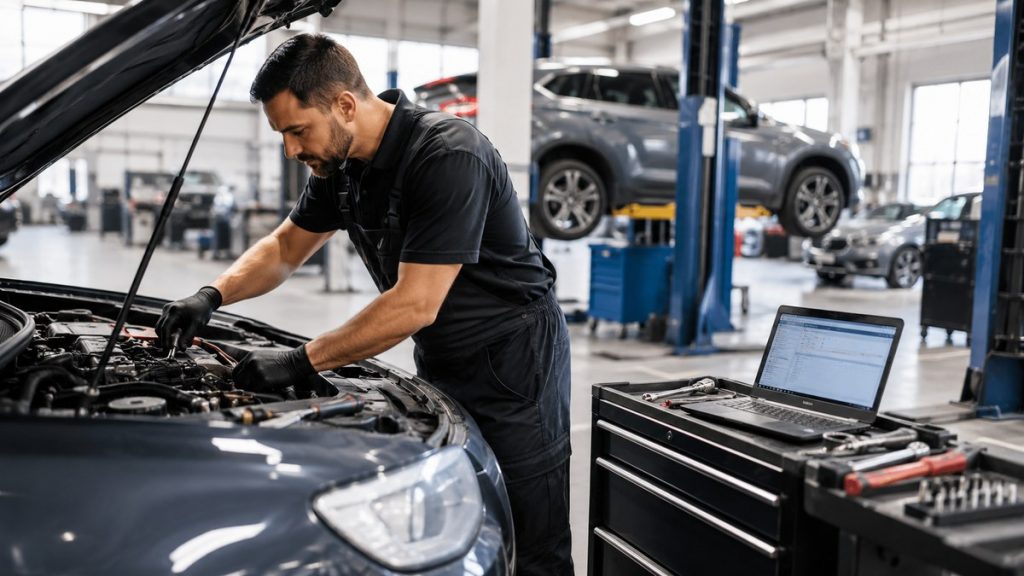
Automotive technician servicing a vehicle at an independent repair shop in Hillsboro Oregon
Experienced technicians, accurate diagnosis, and clear repair options all matter when choosing an auto repair shop.

Why the Hourly Labor Rate Matters

Labor rate is one part of every repair estimate. A shop with a higher hourly rate may charge more for the same number of labor hours, but the final cost also depends on how accurately the problem is diagnosed and how efficiently the repair is completed.

Our current labor rate is $175 per hour, which is competitive compared with many franchise dealership service departments in the Portland area.

However, a lower hourly rate only provides value when the shop also performs quality work. An incorrect diagnosis can lead to unnecessary repairs, repeat visits, and additional expense.

That is why customers should compare the complete service experience—not only the number printed next to the labor charge.

Experience Can Reduce Wasted Time and Unnecessary Repairs

Our shop foreman, Fernando, has more than 20 years of automotive repair experience. He also helps guide and train the other technicians on our team.

Our service department currently includes:

Three repair technicians
One lube technician
Two technicians with approximately nine years of experience
A foreman with more than two decades of experience

Experience is especially valuable when a vehicle has an intermittent warning light, unusual noise, electrical concern, or a problem that another shop has not been able to identify.

A knowledgeable technician can often narrow the diagnosis more efficiently and help avoid replacing parts that are not causing the problem.

Diagnostic Charges Depend on the Concern

Not every vehicle problem requires the same amount of diagnostic work.

A straightforward concern may require approximately half an hour of diagnostic time. More complicated electrical, drivability, or intermittent problems may require up to two hours or more to test properly.

At Beaverton Car Company, diagnostic charges are based on the amount of testing reasonably needed for the concern. In most cases, diagnostic time ranges from 0.5 to 2.0 labor hours.

The purpose of diagnosis is not simply to read a trouble code. A trouble code may identify the system where a fault was detected, but it does not always identify the failed component.

Proper diagnosis may involve:

Scanning vehicle systems
Testing electrical circuits
Inspecting mechanical components
Confirming fluid levels and condition
Reproducing the customer’s concern
Reviewing manufacturer procedures
Performing road tests
Testing related components before recommending repairs

This process helps the shop provide a more informed repair recommendation.

Written Estimates and Customer Approval

Customers should understand what work is being recommended before repairs begin.

Our service team provides a written estimate that explains the proposed work and estimated cost. Customers can also request an explanation of the diagnosis, repair recommendation, and available parts options.

Communication can be handled by phone or text, depending on the customer’s preference.

Before approving a repair, customers should feel comfortable asking:

What problem was found?
What testing was performed?
Is the repair urgent?
What could happen if the repair is postponed?
Are there different parts options?
Are there related repairs that should be completed at the same time?
What warranty applies to the parts?

A clear estimate helps the customer make an informed decision instead of feeling pressured to approve work they do not understand.

OEM and OES Parts Options

Parts selection can make a meaningful difference in the cost of a repair.

OEM parts are sold through the vehicle manufacturer’s parts network. They are designed for the specific make and model, but they may carry a higher price.

OES parts are produced by original-equipment suppliers—companies that manufacture parts for automakers or produce parts to comparable specifications. Depending on the repair, OES parts can provide a strong balance between quality and cost.

Our service department can use OEM parts when appropriate, but we can also offer OES options that may reduce the repair cost.

The best choice depends on:

The specific component
Vehicle age and mileage
Availability
Price difference
Customer preference
How long the customer plans to keep the vehicle

We discuss available options rather than assuming the most expensive part is automatically the best decision for every customer.

Most parts installed by our service department include a one-year parts warranty. Ask the service team for the specific terms that apply to your repair.

Service for All Makes and Models

Beaverton Car Company services vehicles from all major manufacturers.

That includes domestic, Asian, and European brands, as well as:

Gasoline vehicles
Diesel vehicles
Hybrids
Electric vehicles
Cars
Trucks
SUVs
Performance vehicles

Services may include routine maintenance, diagnosis, brake repairs, suspension and steering work, electrical repairs, heating and air-conditioning service, engine repairs, transmission-related service, and other mechanical needs.

Customers do not need to have purchased their vehicle from Beaverton Car Company to use our service department.

Faster Turnaround and Direct Communication

Long repair delays can create problems for work, family responsibilities, and daily transportation.

Our team focuses on generally shorter turnaround times while still allowing technicians enough time to diagnose and complete repairs correctly.

Turnaround depends on:

The type of repair
Parts availability
Diagnostic complexity
Current shop workload
Whether additional problems are discovered

Customers receive updates as the work progresses and can approve repairs by text when appropriate.

For customers waiting at the dealership, our waiting area includes:

Wi-Fi
Coffee
Water

Our service department is open Monday through Friday from 8:00 a.m. to 4:00 p.m.

What to Compare When Choosing a Repair Shop

Before selecting a service department, compare more than the advertised special or labor rate.

Consider:

  • Technician experience
  • Diagnostic process
  • Written estimates
  • Parts options
  • Parts warranty
  • Communication
  • Turnaround time
  • Experience with your vehicle type
  • Whether the shop explains recommended repairs
  • Whether additional work requires your approval

The lowest initial estimate is not always the lowest final cost. Accurate diagnosis and clear communication can help prevent unnecessary work and repeat repairs.

Schedule Auto Service in Hillsboro

Beaverton Car Company provides maintenance, diagnosis, and repair for all makes and models at our Hillsboro service department.

Our team combines a competitive $175 hourly labor rate, experienced technicians, OEM and OES parts options, written estimates, and straightforward communication.

To arrange service, use our online scheduling page or call the service department at 503-479-7907.
Schedule your service appointment online.

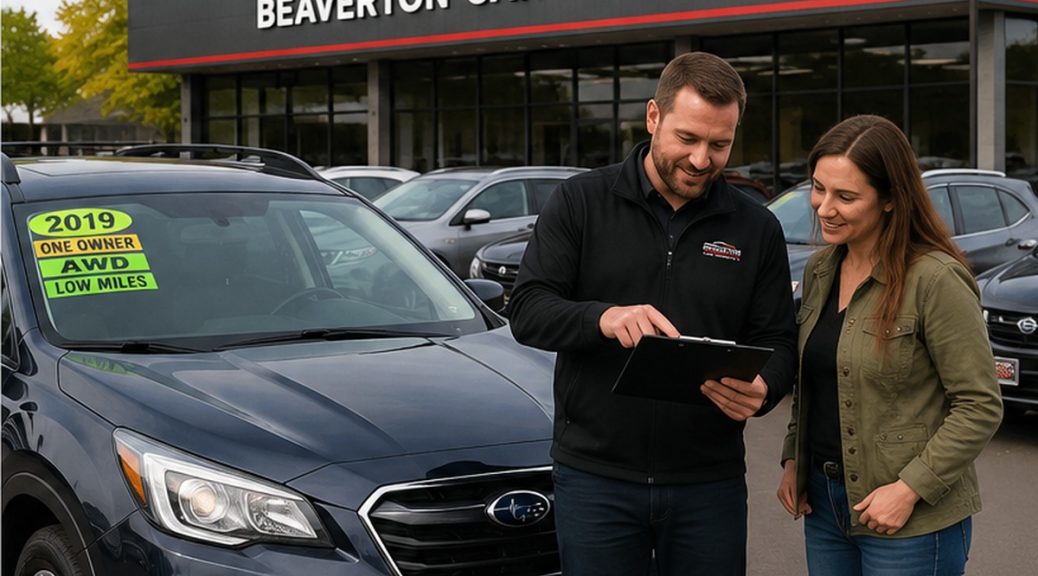
Used vehicle being inspected at Beaverton Car Company in Hillsboro Oregon

What to Look for When Buying a Used Car in Oregon

Buying a used vehicle can provide excellent value, but the right choice involves more than finding a model you like at an affordable price. Vehicle history, current condition, ownership costs, financing, and the way the vehicle fits your daily driving all matter.

For drivers shopping in Hillsboro, Beaverton, Portland, or elsewhere in Oregon, the following steps can help you evaluate a used vehicle more confidently.

Start With the Way You Will Actually Use the Vehicle

Before comparing specific vehicles, think about what the vehicle needs to do for you.

Consider questions such as:

How far do you commute each day?
Will the vehicle regularly carry children or other passengers?
Do you need extra cargo room?
Will you frequently drive in heavy rain, snow, or mountain conditions?
Do you need to tow anything?
Is fuel economy more important than power or interior space?
How long do you plan to keep the vehicle?

A compact car may be an excellent choice for a long commuter who prioritizes fuel economy. A three-row SUV may work better for a growing family. A truck may be useful for towing or work, but it may also cost more to fuel, insure, and maintain.

The best vehicle is not necessarily the largest, newest, or most expensive option. It is the one that fits your actual needs without creating unnecessary ownership costs.

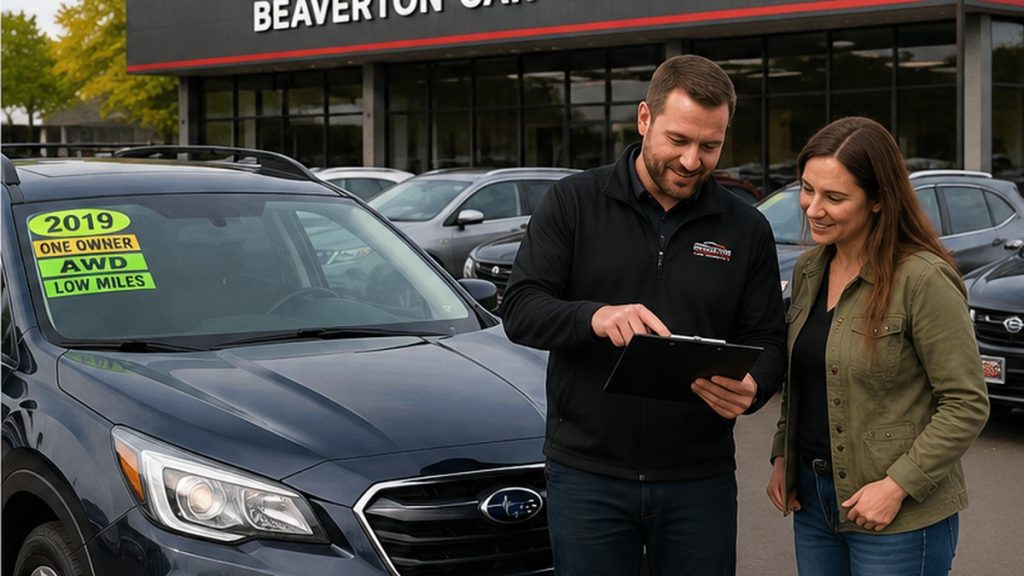
Used vehicle being inspected at Beaverton Car Company in Hillsboro Oregon
The right used car is not necessarily the newest or most expensive option. It is the vehicle that fits your needs, budget, and daily driving.

Review the Vehicle’s History

A vehicle-history report can provide useful information about a used car’s past.

Depending on the information available, a history report may show:

Reported accidents or damage
Previous ownership
Title history
Reported service records
Registration locations
Mileage history
Commercial, rental, or fleet use
Open recalls reported through available databases

A clean history report can be reassuring, but it should not replace a physical inspection. Not every repair, accident, or maintenance visit is necessarily reported.

Likewise, a vehicle with a reported accident should not automatically be rejected. The severity of the damage, quality of the repair, current condition, and price should all be considered.

At Beaverton Car Company, complimentary CARFAX vehicle-history reports are available for our inventory so customers can review available history information before making a decision.

Inspect the Current Condition

A used vehicle should be evaluated based on its condition today, not only its age or mileage.

Important areas to review include:

Tires

Look at the amount of tread remaining and whether all four tires are wearing evenly. Uneven wear can sometimes indicate alignment, suspension, or tire-maintenance concerns.

Also check whether the vehicle has four matching tires. A newer vehicle with mismatched or heavily worn tires may require additional expense soon after purchase.

Brakes

Ask about the remaining brake-pad life and whether the rotors show signs of excessive wear or vibration.

During the test drive, pay attention to:

Steering-wheel vibration while braking
Grinding or squealing sounds
Pulling to one side
A soft or unusually firm brake pedal


Fluids and visible leaks

Look underneath the vehicle and around the engine compartment for signs of leaking oil, coolant, or other fluids.

Some moisture from air-conditioning operation is normal. Dark oil, brightly colored coolant, or a strong fluid smell should be investigated.

Exterior condition

Walk around the vehicle in good lighting and look for:

Dents and scratches
Paintwork that does not match
Uneven panel gaps
Cracked lights
Windshield chips
Wheel damage
Rust or corrosion

Cosmetic flaws do not always make a vehicle a poor purchase, but they should be understood before the sale and considered when comparing the price.

Interior and electronics

Test the features that matter to you, including:

Air conditioning and heat
Power windows and locks
Infotainment system
Backup camera
Driver-assistance features
Heated or ventilated seats
Sunroof or moonroof
Seat adjustments
Charging ports
Interior lighting

Modern vehicles can contain many electronic features. Testing them before purchase can prevent unpleasant surprises.

Every retail vehicle at Beaverton Car Company is inspected before sale, and inspection information is available upon request.

Take a Meaningful Test Drive

A short drive around the block may not reveal how a vehicle truly behaves.

When possible, drive the vehicle in conditions similar to your normal routine. That may include:

City streets
Highway speeds
Hills
Stop-and-go traffic
Tight parking areas
Rough or uneven pavement

During the test drive, pay attention to:

How the engine starts and idles
Transmission shifts
Steering feel
Braking
Suspension noise
Wind or road noise
Warning lights
Visibility
Seat comfort
Ease of entering and exiting
Whether the vehicle feels appropriately sized

Turn the audio system down for part of the drive so you can listen for unusual sounds.

A vehicle can look excellent in photos and still be uncomfortable for your seating position, commute, or driving style. The test drive is where you determine whether the vehicle actually works for you.

Compare More Than the Advertised Price

The advertised price is important, but it is only one part of the total ownership cost.

Also consider:

Registration and applicable fees
Insurance costs
Fuel economy
Recommended maintenance
Tire replacement costs
Repair costs
Financing rate and term
Expected resale value
Optional protection products

Two vehicles with similar prices may create very different monthly and long-term costs.

For example, a luxury vehicle may be attractively priced as a used car but could require more expensive tires, brakes, parts, and maintenance than a mainstream sedan or SUV.

Before committing to a vehicle, make sure you understand both the purchase amount and the cost of keeping it.

Understand the Financing Terms

When financing a used vehicle, do not evaluate the deal based only on the monthly payment.

Review:

Vehicle selling price
Amount financed
Down payment
Interest rate
Loan term
Total of payments
Trade value
Existing loan payoff
Optional products included in the financing

A longer loan term can reduce the monthly payment, but it may increase the total interest paid and keep you in the loan longer.

The best financing structure depends on your budget, credit profile, expected ownership period, and the vehicle being purchased.

Ask questions when something is unclear. A payment should make sense not only today but throughout the time you expect to own the vehicle.

Consider Whether Additional Coverage Fits Your Needs

Some buyers prefer to accept the risk of future repairs themselves. Others want additional protection from certain covered repair expenses.

Extended service contracts may be available depending on the vehicle and coverage selected. Important details can include:

Covered components
Exclusions
Deductible
Time and mileage limits
Maintenance requirements
Claim procedures
Repair-facility requirements
Cancellation provisions

Depending on the contract selected, covered repairs may be completed at qualifying repair facilities, including ASE-certified shops outside the immediate Portland area.

An extended service contract is not the same as routine maintenance, insurance, or a guarantee that a vehicle will never need repairs. Review the actual contract and choose coverage based on the vehicle, your budget, and your comfort with repair risk.

Ask Questions Before You Decide

A reputable dealership should be willing to answer reasonable questions about the vehicle and the buying process.

Useful questions include:

Is a vehicle-history report available?
What inspection information is available?
What maintenance was completed before the vehicle was offered for sale?
How many keys are included?
Are there known cosmetic or mechanical concerns?
What fees are added to the advertised price?
Are protection products optional?
What financing terms am I being offered?
Can I take another test drive before deciding?

Used vehicles are not identical products. Even two vehicles of the same year, make, model, and mileage may have different histories, equipment, condition, and ownership costs.

The more clearly you understand the specific vehicle, the better prepared you will be to decide whether it is the right one.

Shop Used Vehicles in Hillsboro, Oregon

Beaverton Car Company offers a broad selection of used cars, trucks, SUVs, hybrids, electric vehicles, and performance vehicles in Hillsboro.

You can review current pricing, mileage, photos, equipment, and available vehicle-history information online before visiting the dealership.

View our current used-vehicle inventory or contact our team with questions about a specific vehicle.